
A Vision for the Future: Highlights from the International AMD Symposium
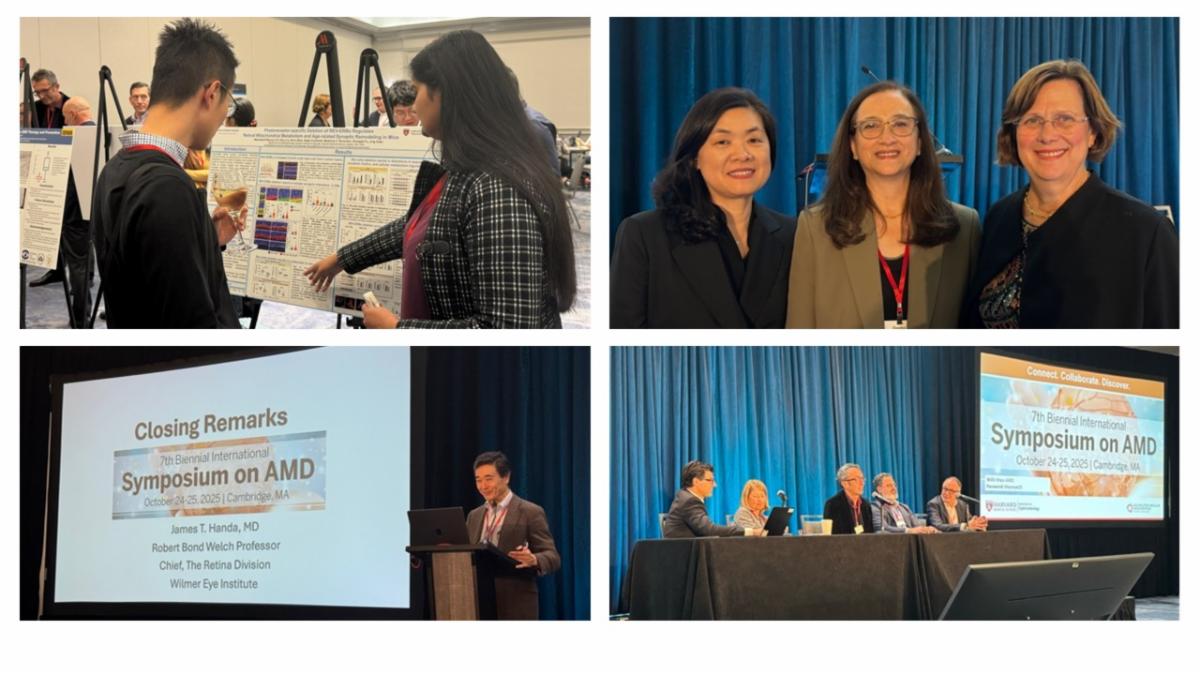
On October 24–25, 2025, Harvard Ophthalmology welcomed more than 200 clinicians, scientists, and trainees to Boston for the 7th Biennial International Symposium on Age-Related Macular Degeneration (AMD). First established in 2010, the symposium has become a leading forum for sharing advances in AMD research, discussing clinical challenges, and exploring new directions in the field.
Co-chaired by Pat D’Amore, PhD, MBA, Deeba Husain, MD, and Ivana Kim, MD, the meeting featured distinguished speakers presenting the latest findings in AMD pathophysiology, clinical trials, and emerging technologies. Topics ranged from inflammation and disease risk factors to multi-omics applications, epidemiology, drusen biogenesis, imaging innovations, and novel therapeutics. Each session ended with an energetic panel discussion driven by audience questions—long recognized as a highlight for both attendees and panelists.

The 2025 Ephraim Friedman Lecture was presented by Philip J. Rosenfeld, MD, PhD, Professor of Ophthalmology at the University of Miami. In his lecture, “The role of choroidal perfusion in AMD,” Dr. Rosenfeld explored the role of chronic perfusion deficits in disease progression and discussed the safety and feasibility of ophthalmic artery angioplasty as a treatment for geographic atrophy in late-stage AMD.
A poster session and networking reception provided additional opportunities for trainees and investigators to share their work. Harvard Ophthalmology proudly supported 15 attendees with NEI-funded travel awards.
With its biennial cadence and multidisciplinary attendance, the symposium offers a platform for investigators to share their progress and spur collaborations with the collective goal of better understanding and treating retina disorders like AMD. In his closing remarks, James T. Handa, MD, Chief of the Retina Division at Wilmer Eye Institute, offered an insightful synthesis of the symposium's discussions, leaving the audience energized for the discoveries ahead.